
Peptide Serums for Topical Research
This collection covers our ready-to-use topical research serums: a GHK-Cu copper peptide serum, the Noctura nighttime serum and the Ceralux 4-in-1 serum. Each comes in a 30 mL dropper bottle, in liquid form for ease of application and stability, with its full composition listed on the product page.
What Is a Peptide Serum?
A peptide serum is a liquid topical formulation that combines research peptides or active compounds with hydrating and supporting ingredients. Serums are used in topical research models, such as skin explants and skin-structure studies, where the formulation is applied to a surface rather than prepared from powder. All serums are sold strictly for laboratory research and are not for human or veterinary use.
GHK-Cu Peptide Serum
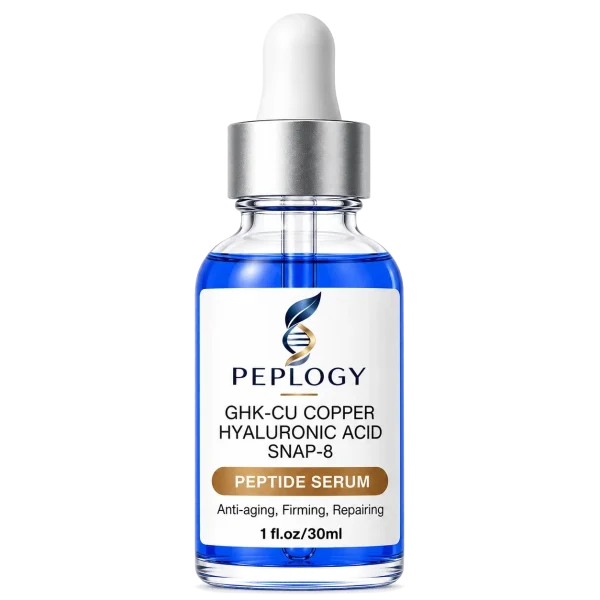
Our copper peptide serum is built around GHK-Cu, a naturally occurring copper peptide studied for collagen production, skin elasticity and the skin's own hyaluronic acid production. The formula also contains:
- Hyaluronic acid, a humectant that draws moisture into the skin
- SNAP-8, listed on the label alongside GHK-Cu and hyaluronic acid
- Dipeptide (DBD), palmitoyl pentapeptide-3 and hexapeptide-9, studied for wrinkle appearance, collagen production and tissue repair
- DMAE, studied for skin firmness
- Dimethyl isosorbide, a transdermal agent that carries ingredients into the upper epidermis
- A base of vegetable glycerin and ultra-pure Milli-Q water, preserved with paraben-free Optiphen
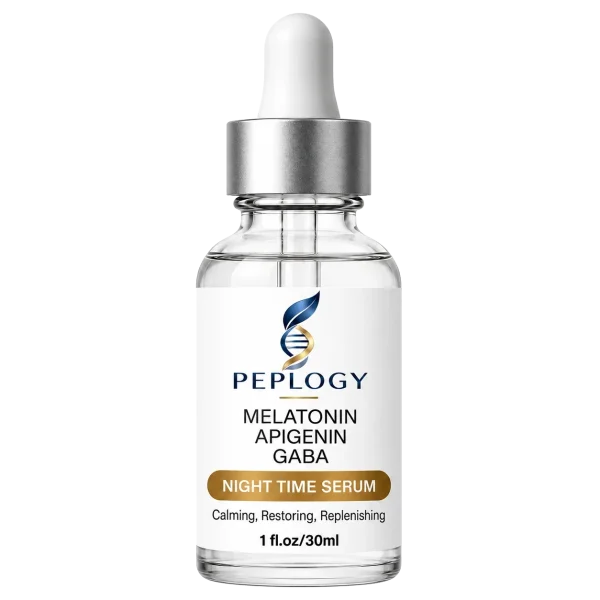
Noctura Serum (Melatonin, Apigenin, GABA)
Noctura is a nighttime research serum for studies of sleep-cycle regulation, relaxation pathways and overnight cellular recovery. Melatonin is widely studied for its role in circadian timing, apigenin for its calming, neuro-supportive properties, and GABA, a key inhibitory neurotransmitter, for relaxation and reduced neuronal excitability in topical research models.
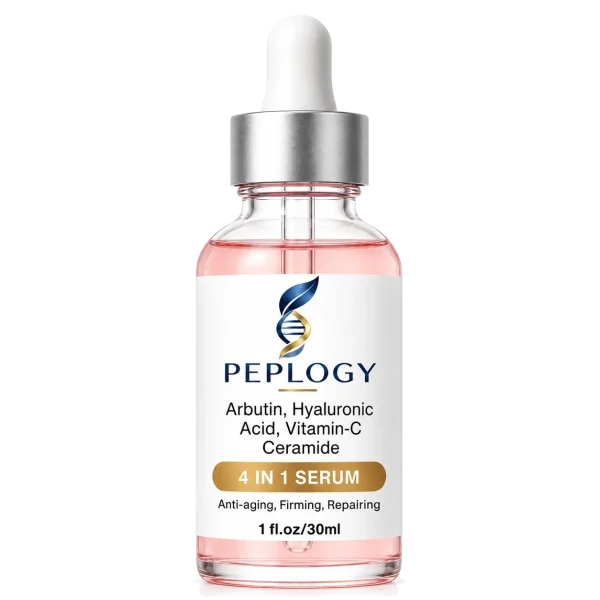
Ceralux Serum (Arbutin, Hyaluronic Acid, Vitamin C, Ceramide)
Ceralux is a 4-in-1 serum for studies of skin tone, hydration and barrier repair. Arbutin and vitamin C are researched for their role in regulating pigmentation, melanin synthesis and antioxidant defense; hyaluronic acid for moisture binding and suppleness; and ceramide for reinforcing the skin's lipid barrier and reducing transepidermal water loss.
Which Serum Fits Your Research?
- Skin structure, collagen and repair: GHK-Cu Peptide Serum
- Circadian rhythm and relaxation pathways: Noctura Serum
- Skin tone, brightness, hydration and barrier function: Ceralux Serum
Serums vs. Peptide Vials and Capsules
GHK-Cu is also available as a lyophilized vial (50 or 100 mg) and inside the Glow and Klow blends. The vial suits studies that prepare their own solutions, while the serum combines GHK-Cu with supporting ingredients in a finished topical formula.
Key Terms in Topical Serum Research
- Humectant: an ingredient, such as hyaluronic acid or vegetable glycerin, that draws in and holds moisture.
- Transdermal agent: an ingredient, such as dimethyl isosorbide, that helps other ingredients pass into the upper epidermis.
- Lipid barrier: the skin's protective outer layer, which ceramide is studied for reinforcing.
- Transepidermal water loss (TEWL): the water that escapes through the skin, a common measure in barrier research.
Testing and Lot Documentation
Each serum's product page shows the status of the current lot's certificate of analysis. Until a lot's certificate is published, the page reads "Lot COA coming soon"; published certificates are added to our COA library, searchable by compound or lot number.
How to Store Research Serums
Store serums below 25 °C, away from direct light, and keep the bottle capped. Use a clean dropper for every draw to avoid contaminating the formula.
Ordering Research Serums in the USA
We ship within the United States Monday through Thursday, with same-day dispatch on orders placed by 2 PM ET and free shipping on orders of $150 or more (Alaska and Hawaii excluded). Order 3 or more of the same serum for 8% off, or 5 or more for 12% off, applied automatically in the cart.
Peer-reviewed studies on GHK-Cu and topical peptide models are indexed on PubMed, the research database of the US National Library of Medicine.